OpenAI's Planned ChatGPT 'Superapp' Overhaul: What's Behind the Biggest AI Pivot Yet?

June 7, 2026
Alex - aiToggler Team
Reviewed by a two-legged human.
The world of artificial intelligence rarely sits still, but today's big AI news feels like an actual turning point. OpenAI, the company behind ChatGPT, is reportedly preparing its most ambitious overhaul yet: turning ChatGPT into a multi-functional "superapp" packed with AI agents and coding tools. Even in an industry defined by constant change, this move feels like both a serious bet and a sign of just how intense the AI competition has become.
What is reportedly happening at OpenAI?
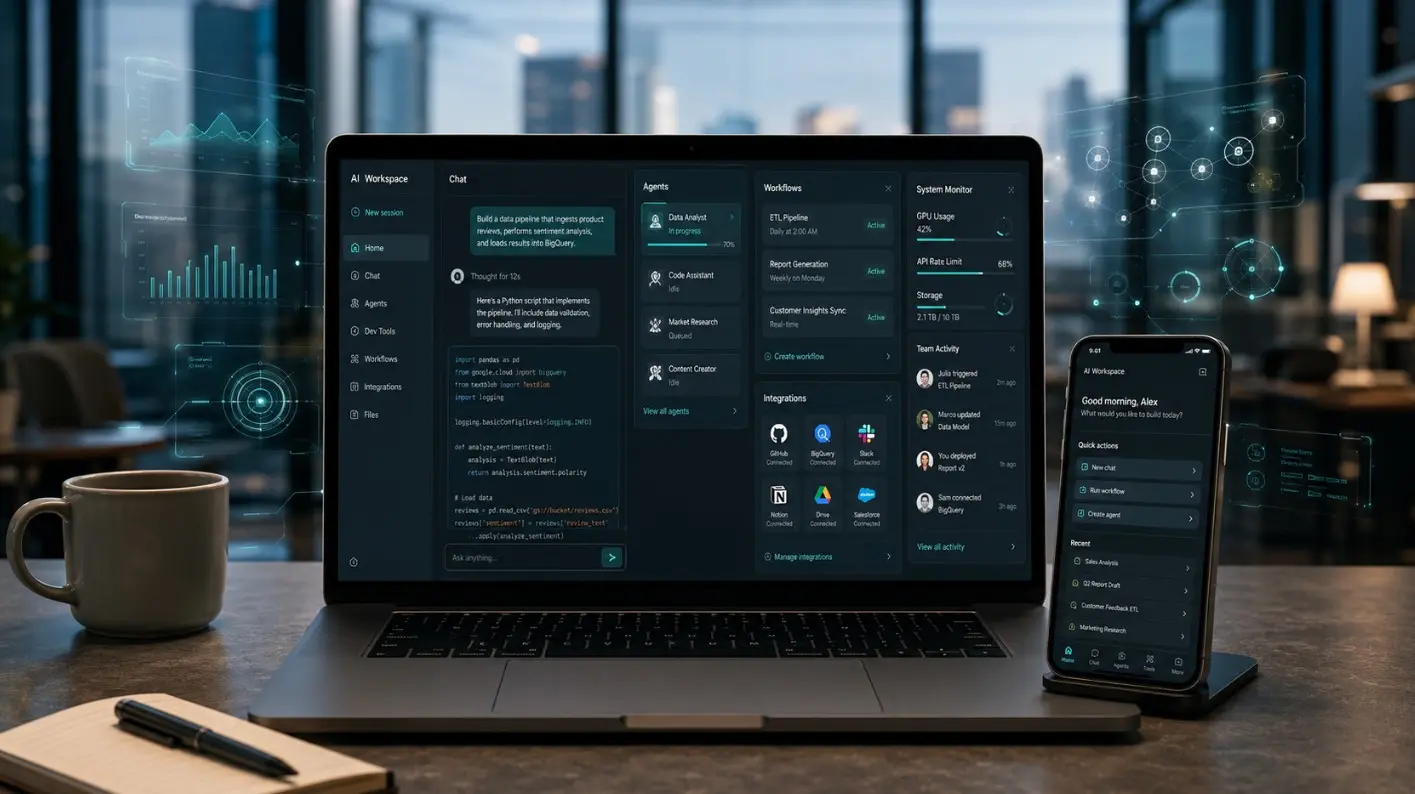
According to a new Reuters report, OpenAI is planning to transform ChatGPT into a "superapp". Think of an all-in-one digital platform that goes well beyond simple chat. The update will reportedly include advanced coding tools and AI agents, with the aim of boosting revenue and strengthening OpenAI's pitch to enterprise customers.
The timing is not random. Sources told Reuters that these changes are coming as OpenAI gears up for a possible public share listing. The overhaul is described as part of a broader reorganization at the company, with more resources moving toward enterprise clients and toward competing more directly with rivals like Anthropic. Reuters notes that it could not immediately verify every detail, so this is still early reporting rather than a final product roadmap. Still, it points to a serious strategic shift inside OpenAI.
Why a "superapp," and why now?
The superapp idea is not new. Asian tech giants like WeChat built huge businesses by bundling lots of services into a single app. In the West, and especially in consumer-facing AI, that approach is still mostly theoretical.
For OpenAI, this reportedly is as much about business as it is about product design. Enterprise customers tend to want more than a chat box. They want tools that can handle multi-step workflows, automate coding tasks, hook into their existing software, and stay within security and compliance guardrails. A superapp pitch makes it easier to say: "Use this one platform for a lot of that."
Reading between the lines, OpenAI appears to be signaling that it wants to be closer to an operating system for AI-powered work than a single-purpose chatbot. That is a big shift from "ask me anything" toward "let me run things for you."
This also looks like a response to a tougher market. Competition is real and getting sharper. As Axios points out, the AI industry is starting to move from hype and experiments to a more sober phase where customers ask boring but fair questions about cost, value, and differentiation. A generic LLM in a chat window is not enough when everyone has one.
The stakes: upside, downside, and open questions
If OpenAI pulls this off, it could quietly reset expectations for what an AI platform is supposed to do. Picture a version of ChatGPT that does not just answer questions, but also writes and maintains code, runs small agents that manage projects, integrates with your company's tools, and automates a chunk of your day, all inside one environment that big companies can control.
That is the optimistic version. I am not sure it plays out that cleanly.
Packing that many features into one app can easily make it messy. The current ChatGPT experience is relatively simple: you type, it replies. Start layering in agents, workflows, and coding environments and users may get lost in the options. There is a thin line between "superapp" and "crowded dashboard."
Then there is the data angle. If AI agents are going to poke around internal company systems, read sensitive documents, and trigger actions, privacy and security questions stop being theoretical. How transparent will those agents be about what they are doing? How configurable will they be? How much control will IT teams really have over where data flows?
There is also a practical caveat. As Reuters notes, none of this has been officially announced by OpenAI yet. Plans like this can change, slip, or get scaled back once they run into real-world constraints like cost, user confusion, or internal disagreement.
Context: an AI industry in a reality check phase

This news lands in a very different mood than the early ChatGPT hype cycle. As Axios reports, there is growing skepticism, including from inside tech, about whether the current wave of AI tools justifies the money being poured into them. Companies are trimming blind AI spending and asking for clear returns.
Seen in that light, a ChatGPT superapp is less "grand vision" and more "we need to make this thing clearly useful and billable." Moving toward richer workflows and enterprise integrations fits that pressure: more specific tasks, tighter connections to business software, and a product story that is easier to tie to revenue.
Meanwhile, Anthropic, Google, and others are not standing still. Anthropic is pushing hard on safety-conscious enterprise tools, while Google keeps threading AI into Workspace and its own search products. No single company has locked this up yet, and everyone is experimenting publicly. OpenAI's reported pivot is one more high-stakes attempt to find a durable position.
I keep coming back to this tension: the more powerful and embedded these tools become, the more we rely on a very small number of companies to mediate our work. That is convenient until it is not.
Final thoughts
Whether you are deep in AI every day or you just open ChatGPT when you are stuck on an email, this is worth paying attention to. If the superapp vision comes together, it could quietly change how we use AI at work. Instead of "open a tab, ask a question," it starts to look more like "delegate this task and check back later."
I genuinely do not know how to feel about that yet. On one hand, better tools that save time are hard to argue with. On the other, handing more of our workflows to opaque AI agents inside one corporate platform feels a bit uneasy.
For now, this is still in the realm of reporting and leaks, not product release notes. I will be watching to see what OpenAI actually ships, how transparent it is about tradeoffs, and how rivals respond.
Curious how this lands with you. Does a ChatGPT superapp sound helpful, overstuffed, or something in between?