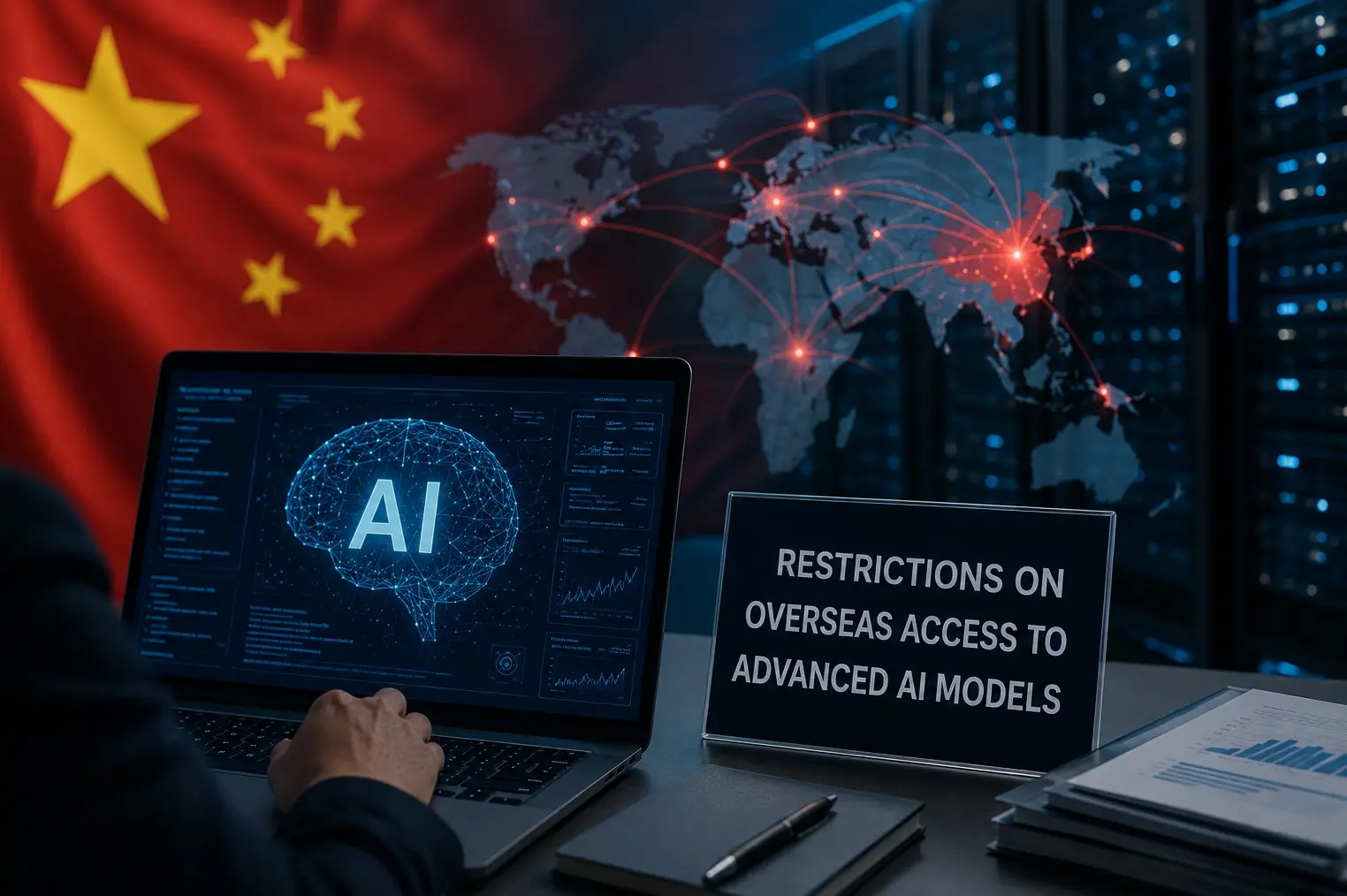
China Considers Restrictions on Overseas Access to Advanced AI Models

July 9, 2026
Alex - aiToggler Team
Reviewed by a two-legged human.
AI news never seems to slow down, but today’s headline carries a little more weight than usual. China is reportedly considering new restrictions on foreign access to its most advanced artificial intelligence models. Depending on how far these talks go, this could change the way AI is shared and developed internationally, and it might raise tensions that are already running high in the global tech world.
What’s actually happening?
According to Reuters, Chinese authorities have held several meetings with major tech firms in recent weeks to discuss possibly restricting overseas access to their top-tier AI models, including some that haven’t been released yet. While we don’t have all the details, these discussions make it clear that Beijing is taking a harder look at who should be able to use its most capable AI technologies, and under what circumstances.
This isn’t just about one tech giant or a single product line. The conversations reportedly involve several of China’s biggest AI players, like Baidu, Alibaba, Tencent, along with a batch of ambitious startups. The main concern on the government side revolves around models that could influence national security or give a significant technological edge to foreign competitors.
Why is this coming up now?
There’s more to the timing than coincidence. The global AI competition keeps accelerating. Reuters recently published a roundup of influential AI models shaping the industry, noting that rivalry is heating up not just between major companies but also between countries - especially the US and China. OpenAI’s much-discussed GPT-5.6, for example, is reportedly preparing for launch after a short delay prompted by US government security reviews. Meanwhile, Chinese AI firms are making rapid progress, often at lower costs than their Western counterparts.
At the same time, the US and others have ramped up export controls on advanced chips and AI technology. China’s possible move looks like it could be a response or at least a way to keep its own breakthroughs closer to home, maybe as a counter to Western restrictions.
What could this mean for global AI development?
If these restrictions become policy, the effects could be significant:
- International research partnerships and commercial AI deals might get harder to arrange. That could slow collaboration and progress in some areas.
- The market could splinter even further, making Chinese and Western AI ecosystems more separate, with less compatibility and more duplicated efforts.
- Security concerns on both sides could increase, pushing governments to treat AI models as strategic assets and possibly fueling a new kind of tech race.
There’s also a practical side to this. As Axios and others have pointed out, competition for compute resources and data is already tight. Companies like SpaceXAI and OpenAI are rolling out new models and battling for market share. If China restricts access to its AI, Western firms could lose out on sources of training data, benchmarks, and potential business relationships.
How should we feel about this?
Honestly, I’m of two minds. On one hand, it makes sense for Beijing to want to protect its technological strengths. The risks of misuse are real, and the geopolitical stakes are high. But as someone who believes in the value of global progress, I can’t help but feel uneasy. Moves like this point toward a world where the best ideas and tools get locked away, rather than shared, and that’s a loss for everyone.
It’s a reminder that AI isn’t just about clever algorithms or smarter chatbots. It’s about power, influence, and the messy politics of this era. The choices made today - often behind closed doors - could decide who gets to use the most advanced AI, and for what, for years to come.
Wrapping up
This story is still evolving, and I’ll be watching to see what, if any, restrictions China actually puts in place, and how other countries react. One thing is clear: AI is now squarely a matter of global strategy, not just technical innovation.
If you’re wondering how these possible changes might affect your own work or just want to follow the latest in the global AI story, feel free to weigh in. I’m curious how others are thinking about this shift, and where the next chapter leads.