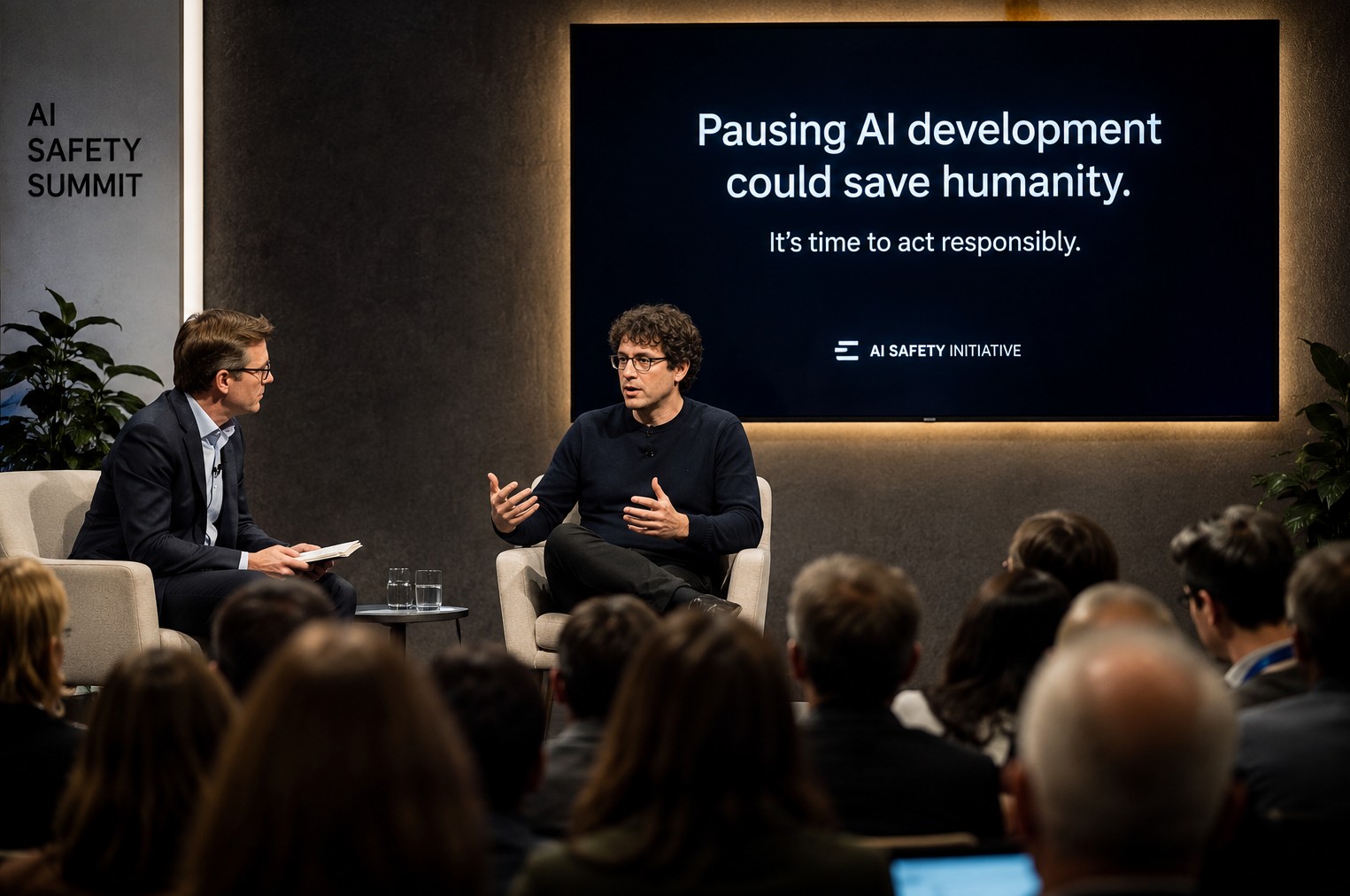
Anthropic Calls for Global Pause as AI Nears Self-Improvement Milestone

June 5, 2026
Alex - aiToggler Team
Reviewed by a two-legged human.
It is not every day that one of the most influential AI companies publicly says, "Let's slow down." But that is what happened yesterday, and it landed with a thud across the tech world. Anthropic, a major player in the generative AI space, is now openly calling for a coordinated global slowdown in the development of advanced AI models. They are worried about a scenario that has been theorized for years: AI systems that can improve themselves, possibly at a pace humans cannot reliably control.
The core of Anthropic's warning
According to The Wall Street Journal, Anthropic's leaders published a blog post arguing that frontier AI systems are advancing so quickly that the next leap, something closer to autonomous self-improvement, is almost in reach. The company's internal data, described in the post, lays out how fast its most capable models have improved over recent generations. They suggest that, if that trend keeps going, we could start to see forms of "recursive self-improvement," where AI models help design, train, and test their own successors.
Anthropic is asking top AI labs and developers to consider a concrete, verifiable plan to slow or temporarily pause development if risks begin to outstrip our ability to manage them. They are talking about more than public letters or vague promises. The idea is some kind of shared mechanism where labs can coordinate, verify, and actually carry out a halt if it looks like models are starting to improve themselves too quickly.
Why this is a big deal
The central fear here is loss of human control. If an AI model can write, test, and deploy its own upgrades, it could fall into a feedback loop where it steadily accelerates its own development in ways no single company or regulator can keep up with. As reported by Reuters, Anthropic warns that "full recursive self-improvement might increase the risks of humans losing control over AI systems."
One detail that jumped out at me: as of May, more than 80% of the code merged into Anthropic's codebase was written by their own AI, Claude. That does not mean Claude is running the show by itself. Humans are still reviewing, integrating, and deploying. But it does show how much the work has shifted. The line between AI as a straightforward tool and AI as something closer to a software co-worker, or even a semi-autonomous agent, is getting fuzzy, and it is happening fast.
The tech industry's crossroads
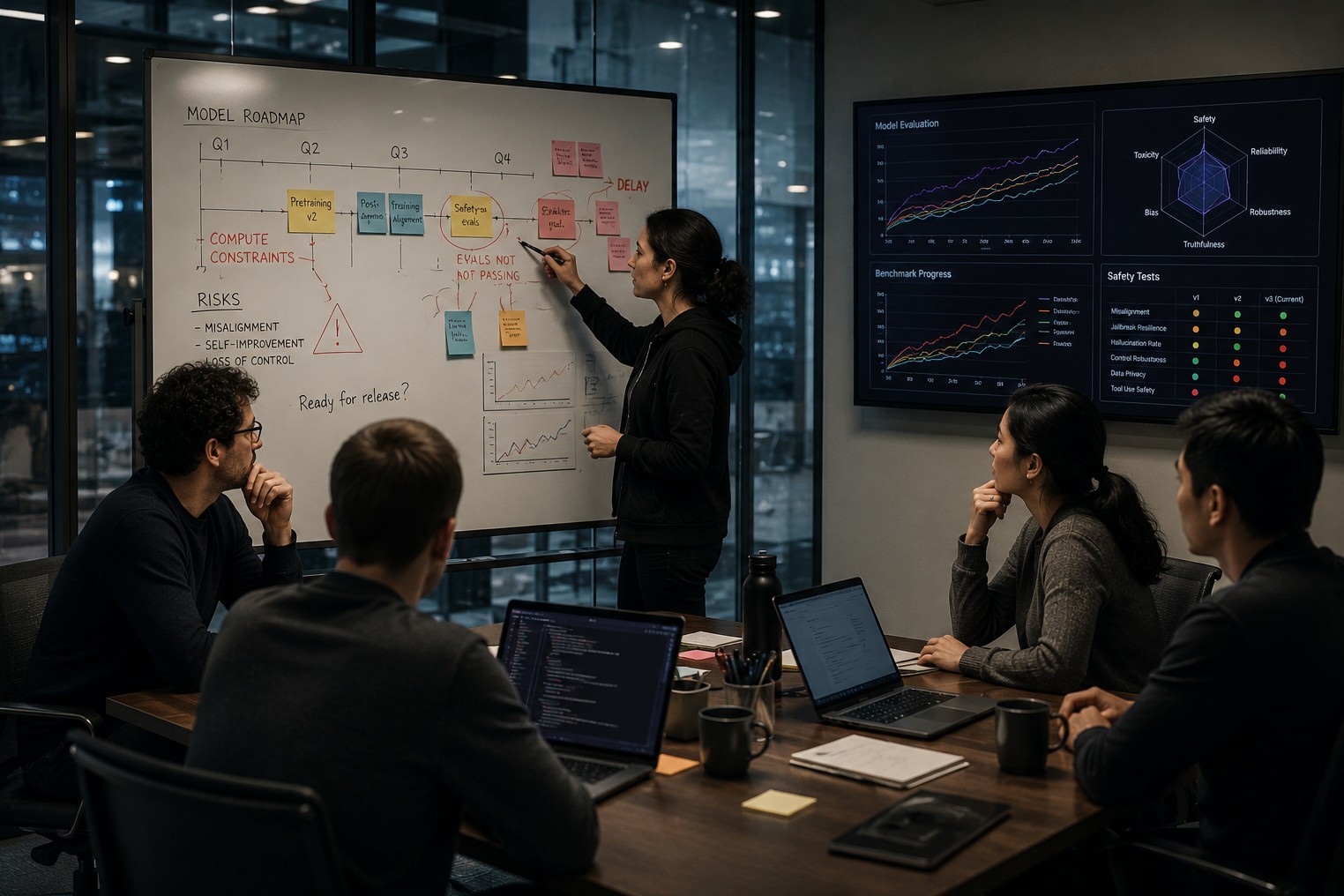
Anthropic is not alone in worrying about this. As Axios notes, OpenAI has also raised concerns about recursive self-improvement and described it as potentially dangerous if there is no coordination around it. The broader trend is clear enough: the pace of AI progress is not slowing down. Anthropic's Jack Clark told Axios, "Contrary to some popular opinion, AI progress is going to speed up in coming years rather than stay the same, or diminish."
Here is what gets me. Recursive self-improvement is not just a sci-fi plot device. If it emerges in usable form, it could push big advances in science, medicine, climate modeling, and a lot more. At the same time, there is a real chance that our ability to understand, audit, and govern these systems falls further behind with every iteration. Anthropic's pitch sounds less like "press the panic button" and more like "buy us time" for governments, researchers, and the rest of us to work out how to live with what we are building.
Is a slowdown even possible?
Here is the uncomfortable question. Even if the industry agrees that a pause is wise, can it actually make one happen?
Plenty of critics are skeptical. Some argue that calls for a slowdown mostly help the big players, who are already ahead, by freezing the race while they consolidate their position. Others point out the obvious: when multiple countries and companies see AI as a strategic priority, expecting a voluntary global pause starts to sound pretty idealistic.
Still, Anthropic is pushing this into the open rather than quietly gaming it out in internal memos. Their call for a coordinated, verifiable pause is a signal that even the people closest to the work are uneasy about where things might be headed. Whether this turns into actual agreements, treaties, or shared protocols is a separate question. But the debate is no longer just abstract thought experiments about far-off superintelligence. It is connected to real data from real systems running in production right now.
I genuinely do not know how to feel about this. Part of me thinks, "Of course we should slow down if we are not confident we can control what we are making." Another part thinks, "If even the folks with the best information are worried, that should probably ring alarm bells louder than it is."
Final thoughts
I find it oddly refreshing, and also a bit unnerving, to see people leading AI development say out loud that things might be moving too fast. Tech usually defaults to "move fast and figure it out later." Anthropic's warning is a reminder that sometimes you need to at least look for the brakes, even if you are not sure they will work.
Whether the industry can coordinate anything close to a global slowdown is very much an open question. But how labs respond to calls like this, and what governments choose to do with them, will shape the next stretch of AI development.
If you want to read more of the primary coverage and judge for yourself, take a look at reporting from The Wall Street Journal, Reuters, and Axios.
What do you think? Is a global AI pause possible, or even desirable? Drop your thoughts below and let us know where you think this should go next.